

Blog
Signs of Mold in Your Grand Rapids Home (And When to Call for Testing)

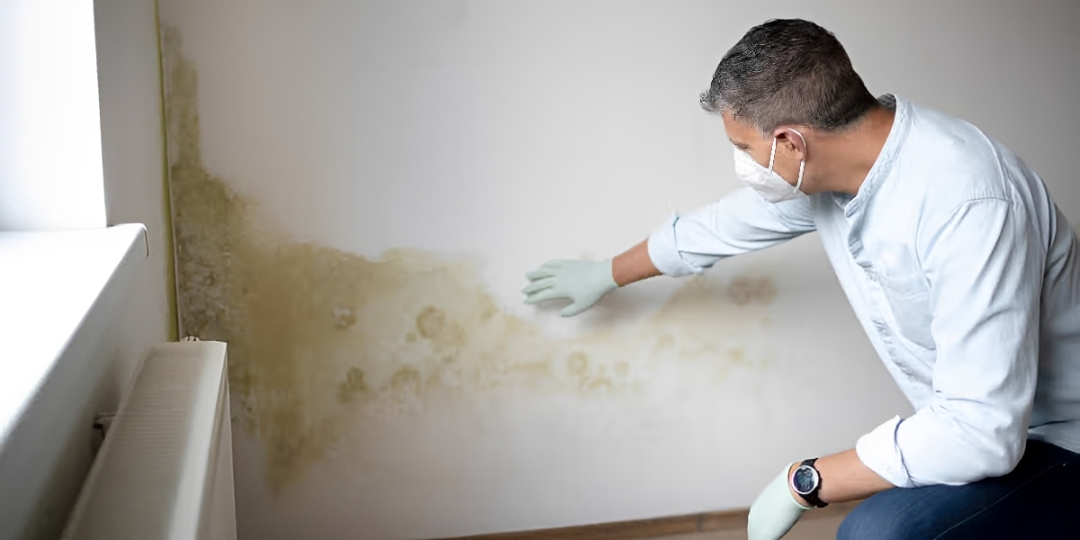
The most common signs of a mold problem in a Grand Rapids home are a persistent musty smell in the basement or lower levels, visible dark staining near water sources, and unexplained allergy or respiratory symptoms that improve when you leave the home. If any of these apply to your property, a professional mold test is the next step. Mold in Grand Rapids homes is frequently hidden inside wall cavities, basements, crawl spaces, and HVAC systems where no visual check can reach it.
Lakeshore Air Testing has conducted mold inspections across Grand Rapids, Wyoming, Kentwood, Walker, and surrounding Kent County communities. This guide covers what to look for and when a professional test is the right call.
Why Grand Rapids Homes Have a Higher Baseline Mold Risk
Grand Rapids sits in the heart of West Michigan’s high-rainfall corridor. The city receives above-average annual precipitation and experiences significant humidity influenced by proximity to Lake Michigan, approximately 30 miles to the west. The Grand River runs through the city, and neighborhoods along its lower-lying corridors experience elevated groundwater levels, particularly after heavy rain or snowmelt.
The housing stock adds to the risk. A large proportion of homes in Grand Rapids were built between the 1900s and 1960s. Older foundation systems, stone and brick construction with minimal vapor barriers, and basement waterproofing designed to pre-modern standards are common throughout the historic neighborhoods of Eastown, Heartside, Heritage Hill, and the West Side. These are the conditions where mold establishes itself quietly and spreads for months before becoming visible at any surface.
Grand Rapids also shares the same freeze-thaw cycle pattern as the rest of West Michigan. Repeated cycles from late fall through early spring gradually widen hairline cracks in older concrete foundations, creating water intrusion pathways that allow groundwater to enter basements even in homes with no obvious exterior damage.
7 Signs You Already Have a Mold Problem
Any one of these signs is worth taking seriously. More than one is a clear signal to test before assuming the problem is minor.
| 7 Signs You Already Have a Mold Problem in Your Grand Rapids Home |
| 1. A persistent musty or earthy smell in the basement, bathroom, or near HVAC vents that does not clear after cleaning or airing out the space |
| 2. Visible dark spots, green or black discoloration, or fuzzy growth on walls, ceilings, grout, or around window frames in lower-level rooms |
| 3. Peeling, bubbling, or warped paint or wallpaper, indicating moisture trapped behind the surface and not just at it |
| 4. Allergy or respiratory symptoms at home — sneezing, congestion, coughing, or eye irritation — that ease noticeably when you leave for several hours |
| 5. Any water event in the last 12 months, including minor basement seepage after heavy Grand Rapids rainfall, even if surfaces appeared to dry out |
| 6. Condensation on interior windows, walls, or pipes during cold weather, indicating sustained indoor humidity above healthy thresholds |
| 7. Symptoms consistently worse in specific rooms, especially basement rooms or rooms directly above a crawl space or utility area |
Why a Visual Check Is Not Enough in Grand Rapids Homes
Most of the mold found during professional inspections in Grand Rapids properties is not visible at the surface. Mold grows inside wall cavities behind finished drywall, under flooring, above drop ceilings in older ranches and bungalows, inside HVAC air handlers, and throughout crawl space joists. By the time mold becomes visible at a surface, it has typically been present behind it for weeks or months.
A homeowner visual check identifies mold at the surface. It cannot identify:
• Whether airborne spore concentrations are elevated throughout the home
• Which species are present and what the associated health risk profile is
• Whether the HVAC system is circulating spores into rooms that appear completely clean
• Whether active growth is occurring inside walls, under flooring, or in the crawl space
The Michigan Department of Environment, Great Lakes, and Energy provides guidance on indoor air quality and mold at michigan.gov/egle/indoor-air-quality. For Grand Rapids homeowners with older properties, this resource covers what independent air sampling is designed to detect.
When to Call for a Professional Mold Test in Grand Rapids
A professional mold test is the right next step when:
• You can smell mold but cannot locate the source after a thorough visual check of the basement and crawl space
• The home has had any water intrusion in the last 12 months, even minor seepage that appeared to dry out completely
• Household members have unexplained allergy or respiratory symptoms that improve when they leave the home for an extended period
• You are buying or selling a Grand Rapids home and want verified air quality data before the transaction closes
• You have completed mold remediation and need a clearance test to confirm the problem is fully resolved
• You are about to turn on the furnace for the fall season and the HVAC system has not been inspected in over a year
What a Mold Test in Grand Rapids Includes
A professional mold inspection at a Grand Rapids home typically takes one to two hours on-site and includes:
• Air sampling. Spore trap cassettes collect air from the main living areas, the basement level, and an outdoor control location. Laboratory results compare indoor and outdoor spore counts to determine whether indoor levels are elevated, and identify the species present.
• Surface sampling. If visible discoloration or suspected growth is present at any surface, a tape lift or swab sample is collected for species identification.
• HVAC inspection. The air handler and accessible return vents are checked for debris or discoloration indicating mold is circulating through the system.
• Written report. Results are returned within 24 to 48 hours. The report documents species, spore counts per cubic meter, and an interpretation of findings by room and sample location.
After the Test
If elevated mold is confirmed, the written report gives you the species identification, location data, and concentration levels a remediation contractor needs to scope work accurately. You can then schedule a clearance test after remediation to confirm the problem is fully resolved.
If the test comes back clean, you have documented proof that the home’s air quality was independently evaluated. This is useful when selling a Grand Rapids property, for insurance documentation, or for your own confidence before sealing the home up for a Michigan winter.
Frequently Asked Questions (FAQS)
How do I know if I have mold in my Grand Rapids home?
The most reliable way is a professional air sampling test. Common signs include a persistent musty smell, visible dark staining near water sources, and allergy or respiratory symptoms that ease when you leave the home. However, mold in Grand Rapids homes is frequently present inside walls, crawl spaces, and HVAC systems with no visible surface indication. Air sampling confirms what a visual check cannot.
Why are Grand Rapids homes at risk for mold?
Grand Rapids sits in a high-rainfall region of West Michigan with significant humidity, proximity to Lake Michigan, and clay-heavy soils that retain groundwater near foundations. The city also has a substantial stock of homes built before 1960, with older foundation systems and basement construction that predates modern moisture management standards. These conditions create a persistently elevated baseline risk for mold in Grand Rapids residential properties.
How much does mold testing cost in Grand Rapids?
Mold testing in Grand Rapids through Lakeshore Air Testing starts from $150. That covers the on-site inspection, air sampling, laboratory analysis, and a written report with species identification and spore counts. Results are returned within 24 to 48 hours.
What is the most common type of mold found in Grand Rapids homes?
The most frequently identified mold species in Grand Rapids residential properties include Cladosporium, Penicillium, Aspergillus, and Stachybotrys chartarum. Penicillium and Aspergillus are commonly found on water-damaged building materials. Stachybotrys chartarum is associated with prolonged moisture exposure. A laboratory report identifies the exact species and concentration at each sample location.
How long does a mold test take in Grand Rapids?
The on-site inspection takes one to two hours depending on the size of the property. Laboratory results are returned within 24 to 48 hours, and you receive a written report with full findings and interpretations for each sample location.
Suspect Mold in Your Grand Rapids Home? Book a Professional Test
Lakeshore Air Testing serves Grand Rapids, Wyoming, Kentwood, Walker, and the greater Kent County area. Testing starts from $150. Written results within 24 to 48 hours.
