

Blog
Radon Testing in Michigan Homes: What You Need to Know Before Winter

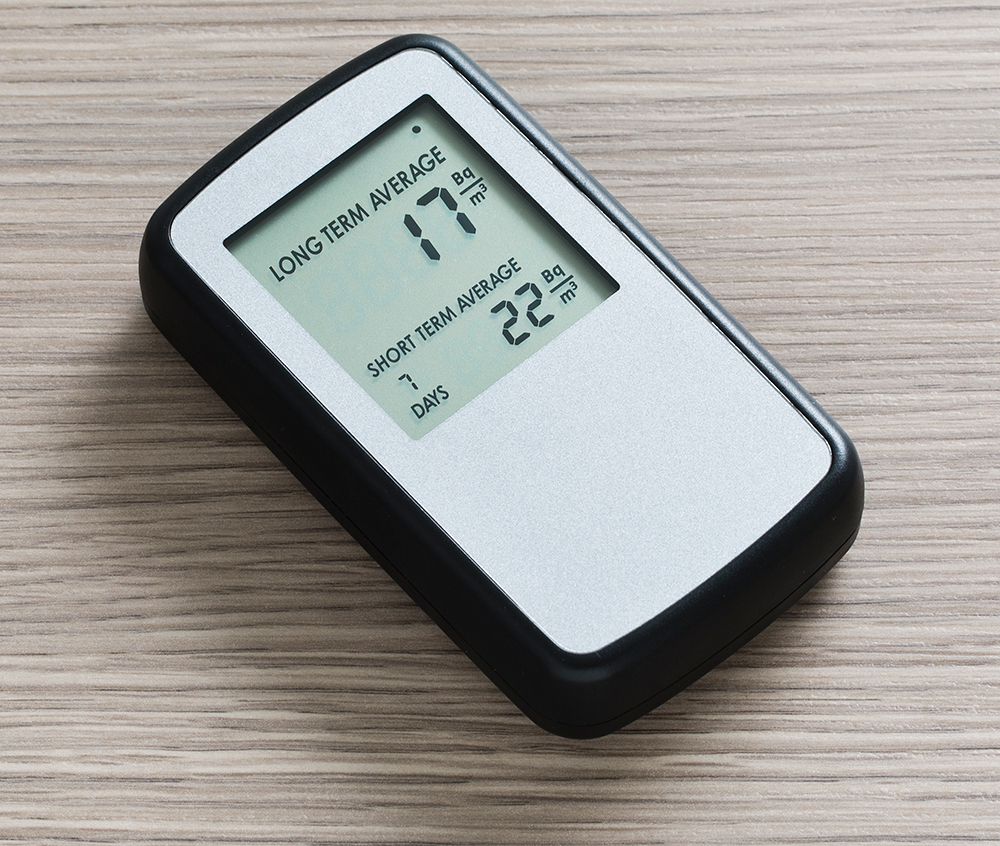
Radon is an odorless, colorless radioactive gas that enters Michigan homes through foundation cracks, sump pits, floor drains, and construction joints. The EPA identifies radon as the second-leading cause of lung cancer in the United States. Testing is the only way to detect it — there are no symptoms, no smell, and no visible signs. Michigan has documented radon risk across the Lower Peninsula, and fall is the best time of year to test because homes are sealed and radon reaches its highest annual concentrations.
Lakeshore Air Testing has conducted indoor air quality assessments across West Michigan for over a decade. This guide covers how radon enters Michigan homes, what risk levels mean, and when professional testing is the right step.
How Radon Enters Michigan Homes
Radon is produced by the natural decay of uranium in soil and rock beneath Michigan homes. It moves upward through the soil and enters through any gap between the structure and the ground:
• Foundation cracks including hairline fractures in poured concrete and mortar joints in block foundations common in Michigan homes built before 1970
• Sump pits and floor drains which provide a direct, unobstructed pathway from below-grade soil into the basement living or utility space
• Construction joints where basement walls meet the floor slab — a standard gap in virtually every Michigan basement
• Utility penetrations where gas lines, water lines, and electrical conduits enter the structure from below grade
Once inside, radon accumulates most heavily in the lowest level of the home. In Michigan homes with finished basements or basement living areas, occupant exposure is highest because that is where radon concentrates and where family members spend time.
Michigan Radon Risk by Region
The EPA has mapped predicted average indoor radon levels across the United States. Michigan has counties in both Zone 1 (predicted average above 4 pCi/L, the EPA action level) and Zone 2 (predicted average between 2 and 4 pCi/L). However, local geology varies significantly within each county. A home can show elevated radon in any Michigan county regardless of the regional zone designation — the only way to know is to test the specific home.
| Region | Key Counties | Testing Recommendation |
| West Michigan | Ottawa, Kent, Muskegon, Allegan | Zone 2. Test all homes before winter. Local soil conditions can produce Zone 1 readings in any county. |
| Southwest Michigan | Kalamazoo, Van Buren, Cass, Berrien, St. Joseph | Zone 2. Test all homes before winter. Kalamazoo and Van Buren areas have documented variation. |
| South-Central Michigan | Barry, Ionia, Montcalm, Clinton, Eaton | Zone 2 with Zone 1 pockets. Elevated readings documented in parts of this region. |
| Southeast Michigan | Oakland, Livingston, Washtenaw, Lenawee | Zone 1 and Zone 2. Among Michigan’s highest average radon readings. Test before every winter. |
| Michigan Statewide | All 83 counties | EPA recommends testing every home regardless of zone. Local geology creates Zone 1 readings in any county. |
Why Fall and Winter Are the Best Time to Test
Radon test results vary depending on how much the home is ventilated. In summer, Michigan homeowners open windows, run whole-house fans, and ventilate naturally through daily activity. This dilutes radon readings during warmer months.
In fall and winter, Michigan homes are sealed. Windows close, ventilation drops, and radon accumulates to its annual peak. A test conducted from October through March reflects the actual radon concentration that Michigan residents breathe during the six to seven months per year when the home is closed up. This is why fall testing produces the most representative result — and the most actionable one.
DIY Test Kits vs. Professional Radon Testing
DIY short-term radon test kits use a charcoal canister placed in the lowest occupied level for 2 to 7 days. The canister is mailed to a laboratory and results are returned in 7 to 14 days. These kits cost $15 to $40 and provide a general indication of radon levels. They are appropriate for initial screening in homes with no transaction deadline.
Professional radon testing uses a continuous electronic monitor that records readings hourly throughout the test period. The monitor is tamper-evident and produces a chain-of-custody report that documents the full measurement window. Professional testing is recommended when:
• A real estate transaction depends on the result
• Previous testing showed a borderline reading near 4 pCi/L
• A mitigation system has been installed and confirmation of its effectiveness is needed
• Documented results are needed for insurance or legal purposes
What Radon Levels Mean
The EPA measures radon in picocuries per liter of air (pCi/L). Here is what the numbers mean for Michigan homeowners:
• Below 2 pCi/L. Near the US average indoor level. No immediate action required, though the EPA notes there is no completely safe level.
• 2 to 4 pCi/L. Elevated above average. The EPA recommends considering mitigation. Testing again with a long-term test (90 or more days) may be advisable.
• 4 pCi/L or above. EPA action level. Radon mitigation is recommended. At this level, long-term exposure carries a significant and quantifiable lung cancer risk.
• 10 pCi/L or above. Significantly elevated. Mitigation should be prioritized before the heating season if possible.
A radon mitigation system using sub-slab depressurization draws radon from below the foundation and vents it above the roofline. Properly installed systems reduce radon levels by 50 to 99 percent. Mitigation for Michigan homes typically costs between $800 and $2,500 depending on foundation type and the number of depressurization points needed.
What to Do After Testing
If results come back below 4 pCi/L, document the test date and result and retest every two years, or after any major renovation that affects the foundation or lower level of the home.
If results are at or above 4 pCi/L, contact a Michigan certified radon mitigation contractor. After mitigation, a follow-up professional test confirms the system is working and provides documentation that the home’s radon level has been brought below the EPA action threshold.
The EPA’s radon resource at epa.gov/radon includes the national radon zone map, a guide to selecting a qualified radon contractor, and guidance on mitigation options for different foundation types.
Frequently Asked Questions (FAQS)
What is radon and why should Michigan homeowners test for it?
Radon is a naturally occurring radioactive gas produced by the decay of uranium in soil and rock. It enters Michigan homes through foundation cracks, sump pits, floor drains, and construction joints. Radon is odorless and colorless with no immediate symptoms, which is why testing is the only way to detect it. The EPA identifies radon as the second-leading cause of lung cancer in the United States. Michigan has documented radon risk across the Lower Peninsula, and the EPA recommends testing every home.
Does Michigan have elevated radon risk?
Yes. Michigan has areas of Zone 1 (predicted average indoor radon above 4 pCi/L) and Zone 2 (predicted average between 2 and 4 pCi/L) risk across the Lower Peninsula. The EPA action level is 4 pCi/L. Local geology varies significantly within individual counties, and elevated readings can occur in any Michigan home regardless of regional zone designation. Testing is the only way to know a specific home’s radon level.
When is the best time to test for radon in a Michigan home?
Fall and winter are the best times to test. When windows are closed and the home is sealed, radon concentrations reach their highest annual levels. Testing in October through March gives the most representative reading of actual radon exposure during Michigan’s long winter season. October and November are the peak radon testing months.
What radon level requires action in a Michigan home?
The EPA recommends radon mitigation for any Michigan home with results at or above 4 pCi/L. Between 2 and 4 pCi/L, mitigation is considered and recommended when feasible. A sub-slab depressurization system can reduce radon levels by 50 to 99 percent. Mitigation for Michigan homes typically costs between $800 and $2,500 depending on foundation type.
What is the difference between a DIY radon test kit and a professional radon test?
A DIY short-term kit uses a charcoal canister for 2 to 7 days, mailed to a lab with results in 7 to 14 days. A professional test uses a continuous electronic monitor that records readings hourly and produces a tamper-evident, chain-of-custody report. Professional testing is recommended for real estate transactions, post-mitigation confirmation, and any situation where results need third-party documentation.
Is your Michigan home safe from radon? Get tested before winter
Lakeshore Air Testing provides professional radon testing across West Michigan, the greater Grand Rapids area, and the Kalamazoo region. Testing performed to EPA protocols. Written results within 24 to 48 hours.
