

Blog
Why Michigan Basements Are the Number One Mold Risk Zone (And What to Do About It)

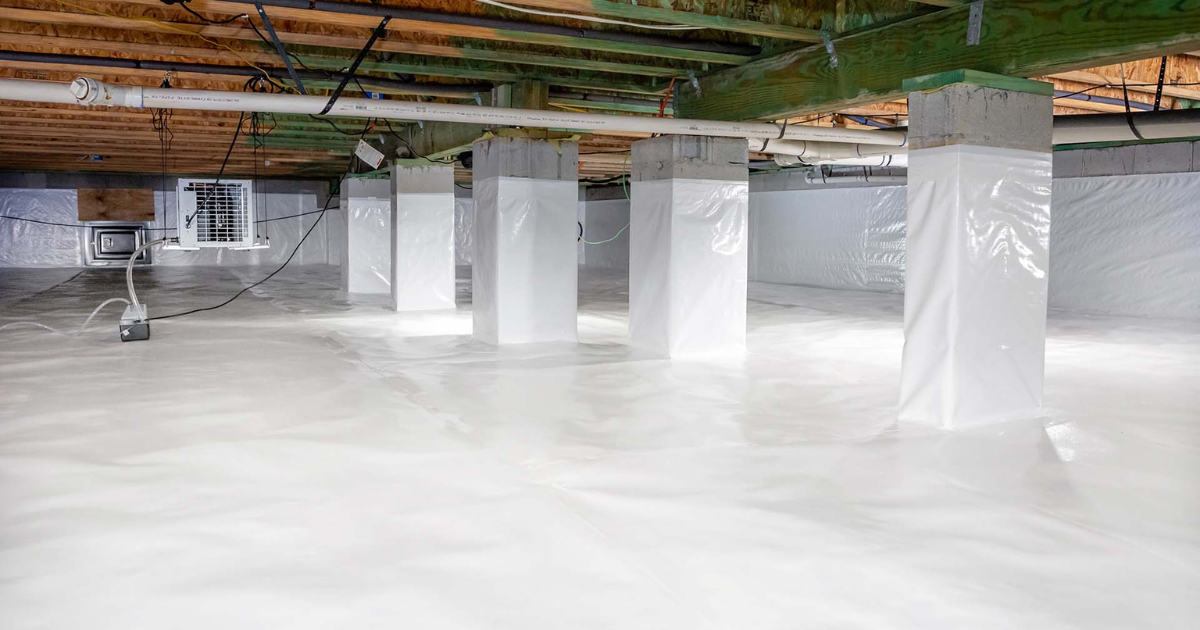
Michigan basements develop mold more frequently than almost any other space in a residential home. The combination of clay soils that retain groundwater, substantial annual rainfall, significant freeze-thaw cycling, and a large stock of homes built before modern waterproofing standards creates conditions that persistently favor mold growth. A musty basement in Michigan is not a housekeeping problem. It is a structural moisture problem, and air sampling is the only way to confirm whether mold is present, what species is growing, and how widespread the contamination is.
Lakeshore Air Testing conducts mold inspections in basements and crawl spaces throughout Grand Rapids, Holland, Muskegon, Kalamazoo, and West Michigan. This guide explains why Michigan basements are uniquely vulnerable, what the warning signs look like, and when a professional test is the right call.
Five Root Causes of Basement Mold in Michigan Homes
Understanding why mold grows in Michigan basements points directly to what needs to be addressed. The five factors below are not independent — they compound each other, which is why mold can appear even in basements that seem dry at the surface.
| Risk Factor | Why Michigan Basements Are Especially Vulnerable |
| Clay soil and groundwater | Michigan soils, particularly in West Michigan, are clay-heavy. Clay retains water rather than draining it, which keeps groundwater in sustained contact with foundation walls and footings. This creates a constant moisture source that older concrete and block foundations cannot fully resist. |
| Seasonal freeze-thaw cycles | Michigan winters subject foundations to repeated freezing and thawing from late fall through early spring. Each cycle creates and gradually widens micro-cracks in concrete and mortar joints. These cracks become water infiltration channels during snowmelt and rain events. |
| Older construction standards | Homes built before 1980 were typically constructed without modern vapor barriers between the soil and crawl space floor, without exterior waterproof membrane coatings on foundation walls, and with drainage tile systems that were minimal or have since failed. These gaps allow moisture to migrate inward continuously. |
| Inadequate ventilation | Many Michigan basements were designed as utility or storage spaces, not living areas, and have limited air exchange. Without adequate ventilation, humidity from soil moisture and indoor activity concentrates and has nowhere to escape, raising relative humidity to the levels mold requires. |
| HVAC and ductwork | Furnaces, water heaters, and air handlers located in the basement add heat that draws moisture from foundation walls. Condensation on cold pipes, ductwork, and the air handler itself creates localized wet surfaces where mold establishes quickly and then circulates through the HVAC system into the rest of the home. |
What Basement Mold Looks Like — And What You Cannot See
Visible indicators of basement mold include:
• Dark spots or fuzzy growth on block walls, floor joists, or drywall, typically gray, black, or greenish in color
• Efflorescence — white mineral deposits on concrete walls — indicating water is actively moving through the foundation
• Peeling paint, warped paneling, or soft drywall near the floor or in corners
• A persistent musty or earthy smell that does not resolve after cleaning or airing out the space
These visible signs are important. But the majority of basement mold found during professional inspections in Michigan homes is not visible at any surface. Mold grows inside the wall cavity behind finished drywall, under vinyl or laminate flooring, inside crawl space walls adjacent to the basement, and inside the HVAC air handler and ductwork. By the time mold appears at a surface, it has typically been present behind it for weeks or months.
Mold found in the HVAC system is a separate concern because the forced-air system distributes spores throughout the home with every heating or cooling cycle. A musty smell in second-floor bedrooms in a Michigan home is often traced back to mold originating in the basement HVAC system during inspection.
The Michigan Department of Environment, Great Lakes, and Energy provides guidance on indoor air quality and moisture management at michigan.gov/egle/indoor-air-quality. For basements with persistent moisture issues, this resource outlines the environmental factors specific to Michigan.
When to Call for a Professional Mold Test
A professional basement mold test is the right call when:
• You can smell mold in the basement but cannot find visible growth after a thorough inspection
• You have experienced any water intrusion in the last 12 months, including minor seepage after heavy rain
• Household members have allergy or respiratory symptoms that are consistently worse at home, particularly in the morning after sleeping near the basement level
• You are preparing to finish a basement in a Michigan home and want to confirm there is no hidden mold before covering the walls
• You are buying or selling a Michigan home and the basement has any of the visual indicators listed above
• You have a crawl space beneath part of the home and it has not been inspected in more than two years
What a Professional Basement Mold Test Includes
A professional mold inspection at a Michigan home typically takes one to two hours on-site. For basement-focused inspections, the process includes:
• Air sampling. Spore trap cassettes collect air from the basement level, the main living area, and an outdoor control location. The laboratory analysis compares indoor and outdoor spore counts to determine whether indoor levels are elevated, and identifies the species present.
• HVAC inspection. The air handler, return air plenum, and accessible ductwork are checked for visible mold growth or debris accumulation that indicates spores are being circulated through the system.
• Crawl space assessment. If the property has a crawl space, it is inspected for moisture, visible mold on floor joists and insulation, and vapor barrier condition.
• Written report. Results are returned within 24 to 48 hours. The report documents species, spore counts per cubic meter, and an interpretation of findings with recommendations by location.
After the Test
A clean result gives you documented proof of your basement air quality at a specific point in time. This is useful for real estate transactions, insurance documentation, and peace of mind when symptoms had an unclear cause.
If elevated mold is confirmed, the written report gives you the species identification, concentration, and location data a remediation contractor needs to scope the work accurately. You can also schedule a clearance test after remediation is complete to confirm the problem is fully resolved before finishing the space.
Frequently Asked Questions
Why do Michigan basements get mold so often?
Michigan basements are particularly prone to mold because of clay-heavy soils that retain groundwater, significant seasonal rainfall, and freeze-thaw cycles that gradually open foundation cracks. Many Michigan homes also have basements built before modern vapor barrier and waterproofing standards were in place. Elevated humidity from groundwater moving through older concrete and block foundations creates the sustained moisture conditions mold requires to grow.
Is basement mold dangerous?
Basement mold can circulate through the entire home via the HVAC system, meaning elevated spore counts are not confined to the basement alone. Health effects depend on the mold species present and the concentration of airborne spores. Common responses include respiratory irritation, allergy symptoms, and worsening asthma. A professional mold test identifies the species and spore concentration so you know what you are dealing with.
How do I know if my Michigan basement has mold?
Common indicators include a persistent musty smell, visible dark spots on walls or floor joists, white mineral deposits on concrete walls, and peeling paint or warped drywall. However, mold in Michigan basements frequently grows inside wall cavities, under flooring, and in crawl spaces with no visible surface indication. A professional air sampling test confirms whether spore levels are elevated even when no mold is visible.
How much does basement mold testing cost in Michigan?
Basement mold testing through Lakeshore Air Testing starts from $150. That includes the on-site inspection, air sampling at the basement level and main living area, laboratory analysis, and a written report with species identification and spore counts. Results are returned within 24 to 48 hours.
Can I fix basement mold myself in Michigan?
Surface mold on small areas can often be addressed with appropriate cleaning products, but cleaning without identifying the moisture source will result in regrowth. The EPA recommends professional remediation for mold growth covering more than 10 square feet. If mold is inside wall cavities, under flooring, or in the HVAC system, surface cleaning will not reach it. A professional test identifies the extent and species, which determines whether DIY cleaning is adequate or professional remediation is needed.
Musty smell or visible mold in your Michigan basement? Book a professional test.
Lakeshore Air Testing serves Grand Rapids, Holland, Muskegon, Kalamazoo, and surrounding West Michigan areas. Mold testing starts from $150. Written results within 24 to 48 hours.
