

Blog
VOC Testing: What Are Volatile Organic Compounds and Does Your Michigan Home Need Testing?

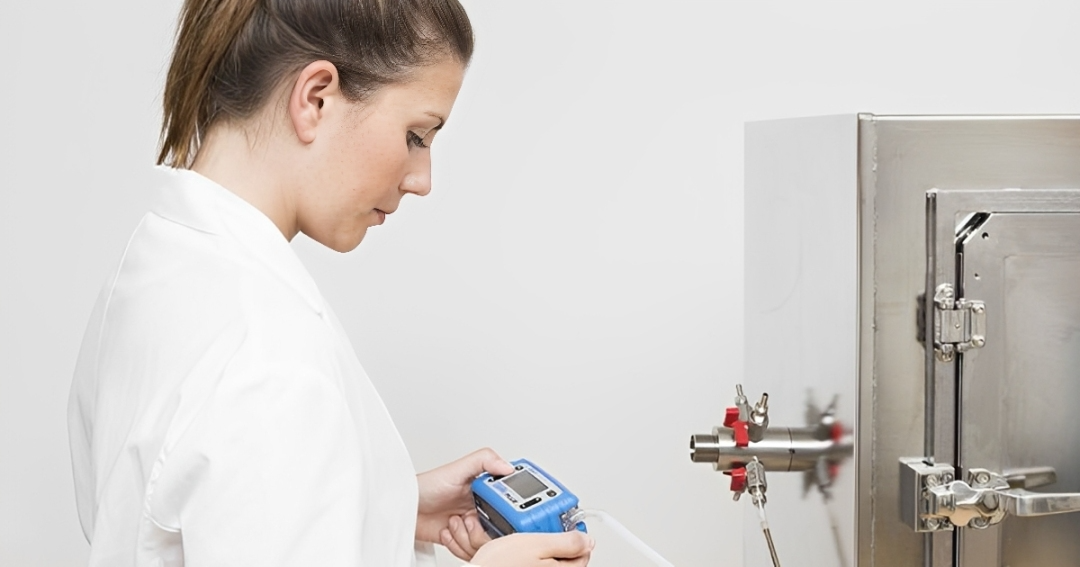
Volatile organic compounds, or VOCs, are chemicals that evaporate at room temperature and enter the air inside your home. They come from paint, flooring adhesives, furniture, building materials, cleaning products, and dozens of other everyday sources. At elevated concentrations, VOCs cause headaches, eye and throat irritation, and dizziness. Some, like benzene and formaldehyde, are classified as hazardous air pollutants with more serious long-term health implications. A professional VOC test measures what compounds are present in your home’s air and at what concentrations, giving you actual data rather than assumptions.
Lakeshore Air Testing provides VOC and indoor air quality testing throughout Grand Rapids, Kalamazoo, Holland, and West Michigan. This guide explains what VOCs are, where they come from, why Michigan homes face elevated risk during certain periods, and when testing is the right call.
What Are VOCs and Where Do They Come From?
VOC is not a single chemical. It is a category that covers hundreds of individual compounds that share the property of evaporating into air at normal indoor temperatures. Some VOCs produce recognizable odors, like the sharp smell of fresh paint or the distinctive scent of new carpet. Others are completely odorless, which is why the absence of a chemical smell does not confirm the absence of VOCs.
Common sources of VOCs in Michigan homes include building and renovation materials, furniture, and everyday household products.
| Source Category | Common VOCs Released | When Risk Peaks |
| Paint and primers | Benzene, toluene, xylene, formaldehyde | First 2 to 4 weeks after application; continues at lower levels for months |
| New flooring and adhesives | Formaldehyde, acetaldehyde, toluene | First 6 to 12 months after installation; highest in sealed rooms |
| Cabinets and composite wood | Formaldehyde from pressed wood and resins | Continuous off-gassing; higher when new, reduces over 1 to 3 years |
| Cleaning and disinfecting products | Ethanol, isopropanol, limonene, chlorine compounds | During and immediately after use; concentrated in enclosed bathrooms |
| Furniture and upholstery | Formaldehyde, PBDE flame retardants, styrene | Highest when new; continues for months to years at lower levels |
| HVAC and gas appliances | Carbon monoxide, nitrogen dioxide, combustion byproducts | During operation; elevated when appliances are poorly maintained |
Why Michigan Homes Face Elevated VOC Exposure
Michigan’s climate creates specific VOC risk conditions that differ from warmer or more temperate states. During the winter months, Michigan homes are tightly sealed for energy efficiency. Windows and doors remain closed for extended periods and mechanical ventilation is minimal. This means VOCs released from building materials and household products have no pathway to escape and accumulate to higher concentrations than they would in a well-ventilated home.
This effect is most pronounced in newer construction and recently renovated homes. Builders and remodelers typically complete work in the fall to meet move-in dates before winter. Homeowners then seal up the home for the Michigan winter just as the highest-off-gassing period for new materials is beginning. The result is the highest indoor VOC concentrations occurring at the moment when the least outdoor air exchange is happening.
Back-to-school season in late August and September is also relevant. Families who spend more time outdoors during summer return to spending more time indoors, increasing their cumulative exposure to whatever VOC levels have built up in the home during summer renovation projects.
The EPA provides a comprehensive overview of VOCs and their health implications at epa.gov/indoor-air-quality-iaq/volatile-organic-compounds-vocs-key-information. This resource covers which compounds are of greatest health concern and the conditions under which exposure risks increase.
When VOC Testing Is Worth Considering
A VOC test is the appropriate next step in these situations:
• After any renovation involving new flooring, paint, cabinetry, or adhesives — particularly if the work was completed in the last six months
• After moving into a newly built Michigan home or a recently renovated property
• If household members have unexplained headaches, fatigue, dizziness, or eye and throat irritation that ease when they leave the home
• If you have weatherized or sealed the home for winter and notice a persistent chemical or solvent odor
• If you have children or individuals with respiratory conditions in the home and want to confirm air quality before winter when indoor time increases significantly
• As part of a general indoor air quality assessment alongside mold and lead testing
What a VOC Test in Michigan Includes
A professional VOC test at a Michigan home typically takes one to two hours on-site and includes:
• Air sampling. Specialized sorbent tubes collect air from the primary living areas, including rooms with new materials or where symptoms have been reported. Samples capture volatile compounds for laboratory analysis.
• Source identification walkthrough. The inspector notes renovation history, new materials, and potential source locations to help interpret results in context.
• Laboratory analysis. Samples are analyzed and results identify which specific VOC compounds are present and at what concentrations.
• Written report. Results are returned within 24 to 48 hours. The report lists compounds detected, concentrations relative to EPA and OSHA reference values, and an interpretation of findings by room.
VOC testing is often conducted alongside mold air sampling as part of a comprehensive indoor air quality assessment, since both affect air quality and both require professional sampling equipment to measure accurately.
Frequently Asked Questions (FAQS)
What are VOCs in a home?
VOCs, or volatile organic compounds, are chemicals that evaporate at room temperature and enter the air inside your home. They come from paint, flooring adhesives, furniture, cleaning products, building materials, and personal care products. Some VOCs are odorless. At elevated concentrations, VOCs can cause headaches, eye and throat irritation, dizziness, and with prolonged exposure, more serious health effects.
Are VOCs in a home dangerous?
Health effects depend on the specific compounds present, the concentration, and the duration of exposure. Short-term exposure at elevated concentrations can cause headaches, nausea, and respiratory irritation. Long-term exposure to certain VOCs such as benzene and formaldehyde is associated with more serious health outcomes. VOC levels are typically highest in tightly sealed Michigan homes during winter when ventilation is minimal and off-gassing from building materials continues.
When should I get a VOC test in my Michigan home?
A VOC test is worth considering after any renovation involving new flooring, paint, cabinetry, or adhesives; after moving into a newly built or recently renovated home; if household members have unexplained headaches, fatigue, or respiratory symptoms that ease when they leave the home; or if you have sealed the home for Michigan winters and notice a chemical or solvent-like odor.
How much does VOC testing cost in Michigan?
VOC testing through Lakeshore Air Testing starts from $150. That covers the on-site assessment, air sampling, laboratory analysis, and a written report identifying which compounds are present and at what concentrations. Results are returned within 24 to 48 hours.
How long does VOC testing take?
The on-site portion takes one to two hours. Air samples are collected using specialized sorbent tubes and sent to a laboratory for analysis. Results are returned within 24 to 48 hours, and you receive a written report identifying which compounds are present and at what concentrations relative to EPA and OSHA reference values.
Not sure what is in your home’s air? Schedule a VOC and indoor air quality test.
Lakeshore Air Testing serves Grand Rapids, Kalamazoo, Holland, and West Michigan. Testing starts from $150. Written report within 24 to 48 hours.
