

Blog
Mold Test Before Buying a House in Michigan: What Home Buyers Need to Know

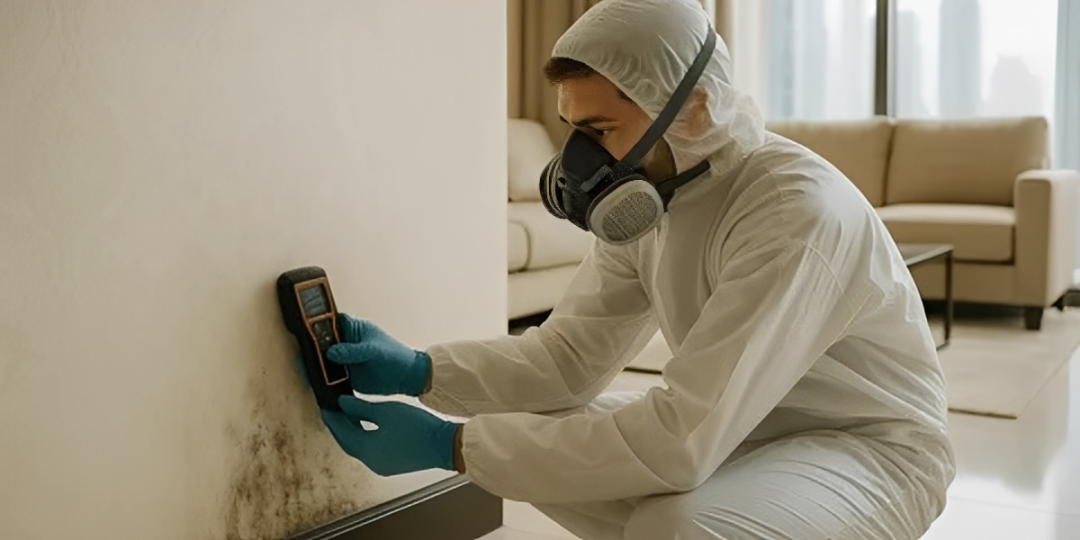
A standard home inspection in Michigan does not test for mold. A general home inspector performs a visual assessment — checking visible surfaces, accessible attic and crawl space areas, and noting obvious staining or musty odors — but does not collect air samples, does not submit anything to a laboratory, and cannot tell you whether elevated mold counts are present in the air. For buyers purchasing a Michigan home with a history of water intrusion, flooding, an older basement, or any visible moisture issues, a separate mold test is the only way to know what the air quality is before you close.
This guide explains when to request a mold test, what the inspection contingency window allows, what the results give you, and how to use those results in a Michigan residential transaction.
Why Home Inspections Miss Mold
Home inspectors are generalists. Their role is to assess the visible, accessible condition of a home’s systems and structure — roof, foundation, electrical, plumbing, HVAC, and exterior. Mold testing is a specialized service that requires equipment home inspectors typically do not carry: spore trap air sampling cassettes, a calibrated air pump, and an accredited laboratory to process the results.
A skilled home inspector may flag potential moisture issues — water staining on a basement wall, discoloration around a window frame, evidence of past flooding in a crawl space — and recommend that a mold inspection be performed. What they cannot do is quantify whether airborne mold spore counts are elevated, identify which mold species are present, or tell you whether a musty smell represents a minor surface issue or an active mold colony behind the wall. That requires an air test.
In Michigan’s older housing stock — where a large share of homes have block basements, older drainage systems, and histories of water management problems — this distinction matters significantly. Many mold problems are not visible from the surface.
When in a Michigan Home Purchase to Request a Mold Test
The table below shows the key stages of a Michigan home purchase and why a mold test is most valuable at each point.
| Purchase Stage | Why a Mold Test Matters at This Stage |
| Inspection contingency period | The standard window to conduct all due diligence testing. A mold test requested here produces results within 24 to 48 hours — fast enough to fit within most contingency periods and inform negotiation before the contingency expires. |
| After home inspector flags moisture | If your general home inspector notes water staining, musty odors, or past flooding, escalate to a mold test immediately within the contingency window rather than waiting. |
| Pre-offer on a high-risk property | For homes with visible basement water damage, known flooding history, or long vacancy periods, a pre-offer mold test — if the seller agrees — prevents walking into a binding contract with unknown mold risk. |
| Post-remediation before closing | If mold is found and the seller performs remediation, a clearance test confirms that mold levels in the treated area have returned to acceptable levels before you close on the property. |
| After closing — inherited problem | If mold symptoms appear after closing, testing establishes a documented baseline and identifies the source for remediation planning and any warranty or disclosure dispute. |
What a Pre-Purchase Mold Test Covers
A pre-purchase mold test at a Michigan home includes the following:
- Area-of-concern air sampling. Air samples are collected from the basement, crawl space, or any areas identified by the home inspector or buyer as potential problem locations.
- Living area air sampling. A sample from the main living area determines whether mold from below-grade or other sources is present in the occupied space.
- Outdoor control sample. An outdoor sample establishes the ambient spore baseline for the site and date, allowing accurate interpretation of indoor results.
- Laboratory analysis. Samples are processed at an accredited laboratory. Results include spore counts per cubic meter and species identification for each sample location.
- Written report. Returned within 24 to 48 hours. The report documents results by location, identifies which species are elevated relative to outdoor baseline, and provides the data needed for a remediation contractor to scope work if mold is found.
What “Elevated Mold” Means in a Transaction
A mold test result showing elevated indoor counts does not automatically kill a transaction. It gives both parties objective data to work from rather than a disputed assessment based on who smelled what in the basement.
With a written test report in hand, common transaction outcomes include:
- Seller-performed remediation before closing, with a post-remediation clearance test confirming acceptable levels before the transaction proceeds.
- Price reduction reflecting the estimated cost of remediation, which the buyer will manage after closing. The report’s remediation scope data supports the negotiation.
- Transaction withdrawal using the inspection contingency if the mold condition is severe and the parties cannot reach agreement. The written report supports the buyer’s position if the contingency is disputed.
A result showing no elevated indoor mold relative to outdoor baseline is equally valuable: it gives the buyer documented confirmation that the air quality is acceptable at the time of purchase, which can be referenced if a mold issue emerges later.
Can a Seller Refuse a Mold Test in Michigan?
A seller can deny access for a mold test, but doing so has consequences within the transaction. Michigan requires sellers to disclose known material defects, and courts have established that known but undisclosed mold can constitute a material defect. A seller who refuses testing access while also denying any knowledge of mold creates a risk posture that most transaction attorneys will advise against.
From the buyer’s perspective: if a seller refuses testing access within an inspection contingency period, the buyer can typically withdraw using the inspection contingency. Buyers should ensure their purchase agreement includes language permitting environmental testing during the inspection period and discuss this with their real estate agent before the inspection contingency expires.
Michigan’s environmental health guidance for homeowners, including indoor air quality resources, is available through the Michigan Department of Environment, Great Lakes, and Energy (EGLE) at michigan.gov/egle/indoor-air-quality.
Frequently Asked Questions (FAQS)
Do home inspectors test for mold in Michigan?
Standard home inspections in Michigan do not include mold testing. A general home inspector performs a visual assessment and may note visible staining or musty odors, but home inspectors are not equipped with air sampling equipment and do not submit samples to a laboratory. A mold test is a separate, specialized service that must be requested in addition to a standard home inspection.
Can a seller refuse a mold test in Michigan?
A seller can refuse testing access, but doing so creates complications in the transaction. Michigan requires sellers to disclose known material defects, and courts have established that known but undisclosed mold can be considered a material defect. If a seller refuses testing access, the buyer can typically withdraw with the inspection contingency intact. Buyers should ensure their purchase agreement permits environmental testing during the inspection period.
How long does a mold test take when buying a house in Michigan?
On-site testing typically takes 45 minutes to 1.5 hours depending on the size of the home and the number of areas tested. Written results are returned within 24 to 48 hours — fast enough to fit within most standard inspection contingency windows in Michigan residential transactions.
What happens if mold is found before closing in Michigan?
Common outcomes include: seller-performed remediation before closing with a clearance test confirming acceptable levels, a price reduction reflecting remediation cost, or transaction withdrawal using the inspection contingency. The written mold test report — with species identification, spore counts, and location data — gives both parties objective data to negotiate from rather than a disputed visual assessment.
How much does a mold test cost when buying a house in Michigan?
Pre-purchase mold testing through Lakeshore Air Testing starts from $150. That includes on-site testing, air sampling, laboratory analysis, and a written report with species identification and spore counts per cubic meter. Results are returned within 24 to 48 hours. Lakeshore serves Grand Rapids, Kalamazoo, Holland, Muskegon, and throughout West Michigan and can typically schedule within the inspection contingency window.
Buying a home in West Michigan? Schedule your mold test before closing.
Lakeshore Air Testing provides pre-purchase mold inspections across West Michigan, including Grand Rapids, Kalamazoo, Holland, Muskegon, and surrounding areas. We work within inspection contingency windows. Testing from $150. Written results within 24 to 48 hours.
